NEWS

Have you ever switched on a coffee machine, toaster, hot plate, dishwasher, microwave oven, sewing machine, vacuum cleaner, humidifier, skin- or haircare appliance, or simply turned on the heating in your home? Have you used outdoor appliances such as barbecues, portable heaters, grills or similar portable cooking appliances? If the answer is yes to any of these—and we suspect it is—then you have been using appliances that comply with standards developed by CLC/TC 61 ‘Safety of household and similar electrical appliances’ and its international counterpart IEC/TC 61.

CENELEC has published the 2nd edition of Guide 32 – ‘Guidelines for Safety-Related Risk Assessment and Risk Reduction for Low Voltage Equipment’, providing updated guidance to hazard identification, risk assessment, and risk reduction. The guide helps technical committees address the safety of low voltage equipment and determine the documentation needed to support the risk assessment. It reinforces the principle that safety should be addressed through an iterative risk assessment process supported by technical data, application experience, and relevant standards.

CENELEC recently established the new technical committee CLC/TC 220 ‘Alcohol interlocks’, with the Secretariat held by DKE, to continue and further develop European standardization work in this important safety area. The technical committee’s scope is to develop European Standards on alcohol interlocks that improve road, transport, workplace and individual safety by preventing people with an alcohol level above a specified limit from operating vehicles, equipment or engaging in unsafe activities. Where necessary, the scope may also be extended to include drug detection.
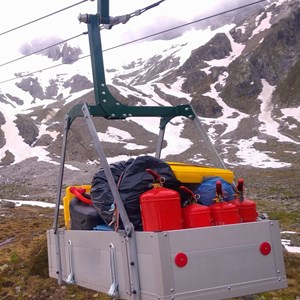
From high alpine peaks to rugged construction sites, cableways are a crucial solution where roads cannot go. But not all cableways are built to carry tourists or skiers. Some are designed to transport goods – or specific individuals – across remote and challenging terrain. For these unique systems, the newly published EN 17639:2025 provides much-needed guidance to ensure safety, performance, and compliance.
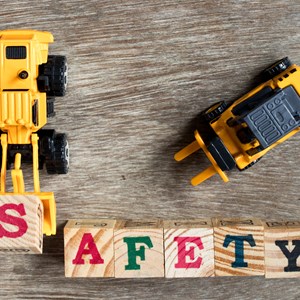
CEN and CENELEC support the objectives of the revision of the safety of toys Directive (2009/48/EC) and the proposal for a safety of toys Regulation (COM (2023)462) to increase children’s safety and improve protection from harmful chemicals.

Every year, the European Week of Sport promotes more active, healthier lifestyles to millions of people in Europe and beyond. All the initiatives in 2023 focus on three important pillars of sport, which also reflect the changes and directions our societies are going towards. These pillars are called ‘the 3 Is’: involvement, inclusion, and innovation.

This European Standard specifies requirements and test methods for oil lamps used in households, in restaurants, in recreational facilities and in similar areas for decorative purposes and to create an atmospheric illumination.
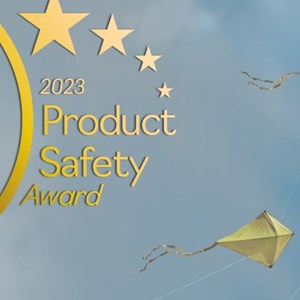
CEN and CENELEC are happy to support the EU Product Safety Award, organised by the European Commission. The Award celebrates innovative business initiatives and research that increase the safety of consumers.
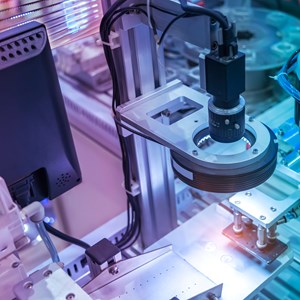
To ensure steady high levels of safety for industrial machinery, it is key to keep relevant safety standards constantly updated, taking into account recent developments in technology. For this reason, in a welcome development in the field of machinery safety, CEN Technical Committee 114 'Safety of machinery', just published an updated version of EN ISO 13849-1:2023 'Safety of machinery - Safety-related parts of control systems - Part 1: General principles for design (ISO 13849-1:2023)'.

The well-established concept of robots refers to bulky machines confined to the industrial environment, carrying out repetitive tasks. In traditional industrial robotics, the operations of robot and operator are complementary and belong to separated workspaces. In the last years, we are witnessing the increasing implementation of robots and robotic devices in several other domains, such as minimally invasive surgery, healthcare, rehabilitation, agriculture and logistics.