NEWS

CEN, the European Committee for Standardization, and its Member SIS, the Swedish Institute for Standards, are delighted to announce that Ms Ulrika Francke has been elected as the new President of CEN. Ms Francke, who previously served as the first woman President of ISO, is now making history once again as the first woman to become CEN President.
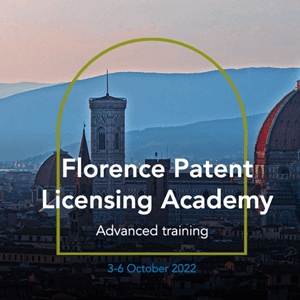
CEN and CENELEC’s Legal Advisor Martin Chatel will be lecturing at The Florence Patent Licensing Academy at the European University Institute (EUI).

CEN and CENELEC would like to congratulate Jo Cops, from Belgium, for his election as the next President of the IEC, the International Electrotechnical Commission. Mr Cops will start his mandate in 2023 and will succeed current President Yinbiao Shu.

On 14 July 2021, the General Court of the EU ruled in the Public.Resource.Org, Inc. and Right to Know CLG v European Commission case (T-185/19) that the European Commission is right to deny free access without charge to harmonized standards (hENs).
On Thursday 24 June, the CEN and CENELEC General Assemblies overwhelmingly agreed to revise the membership arrangements in their statutes, reflecting the UK’s departure from the EU. The agreement comes after careful consideration by the CEN and CENELEC members of the impacts of the UK’s exit from the EU on the European standardization system and on the organizations' membership statutes.

During the COVID-19 pandemic, the CEN and CENELEC community took a series of decisive actions in order to contribute to addressing the health crisis. CEN and CENELEC are now happy to share some key take-aways from this experience in the newly released report “Lessons Learned During the COVID-19 Pandemic”.
European standardization is a collective effort: many different people, coming from a variety of backgrounds, contribute in various forms to making European standards a success.
European standardization is a collective effort: many different people, coming from a variety of backgrounds, contribute in various forms to making European standards a success.
European standardization is a collective effort: many different people, coming from a variety of backgrounds, contribute in various forms to making European standards a success.

Through the Green Deal, the European Commission has set a series of ambitious goals to transition towards a fully green economy and reach the global climate target of net zero by 2050. To reach these objectives, all actors involved will have to rethink the way to produce and consume, the way our infrastructures work, the use of resources and the functioning of transportation systems.