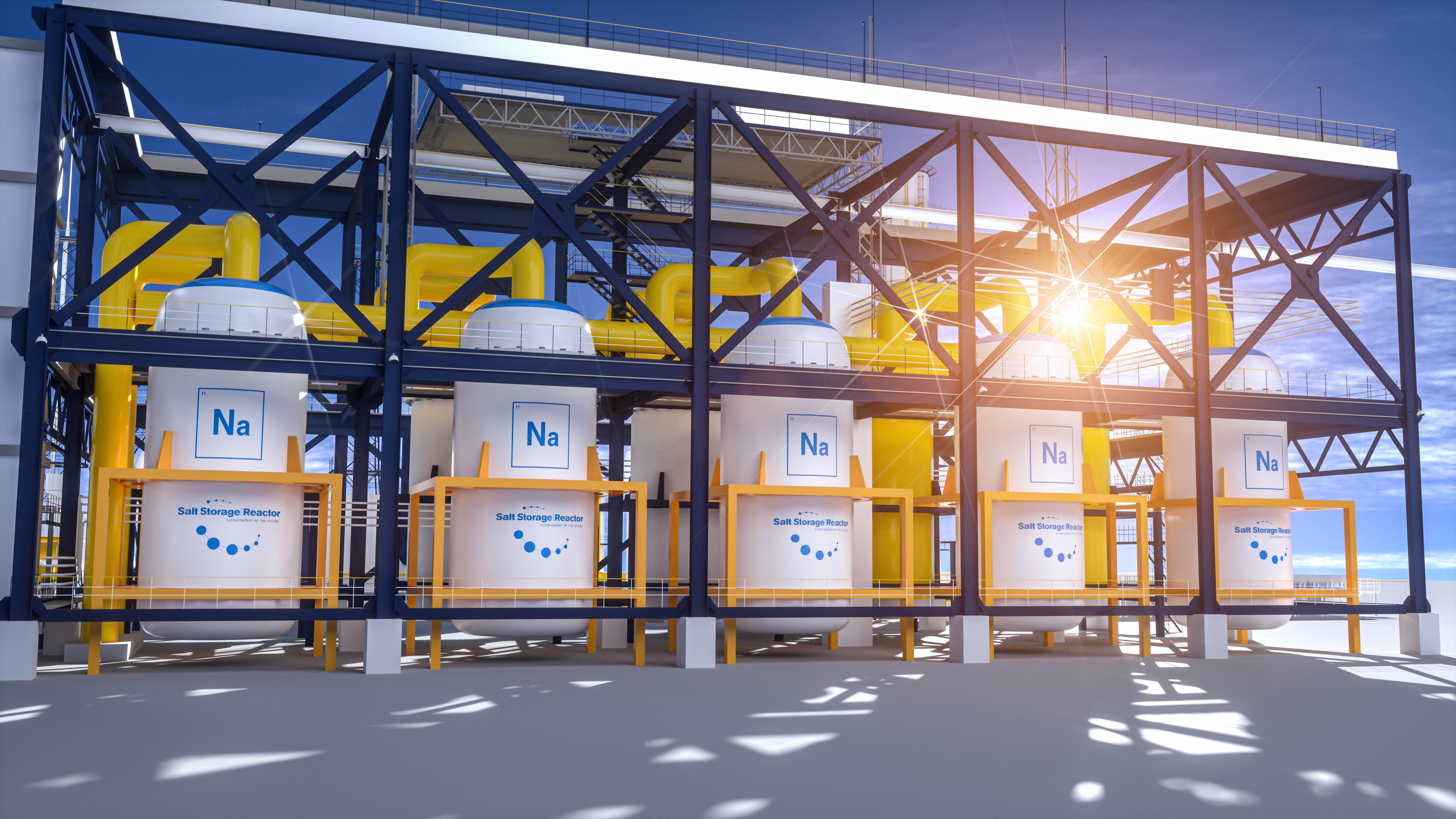
A new Prospective Group (PG5) is being added to the CEN Workshop 64 “Design and Construction Codes for Gen II, III and IV nuclear facilities” as part of the activities of the EU standardization initiative “CORRO-STAR”. This project brings together several R&I projects seeking advancement in the nuclear sector in line with EU strategic goals.
Innovation in some areas of the nuclear sector is a priority for the EU as part of its clean energy strategy. Molten salt reactor (MSR) technologies have been the focus of projects such as MIMOSA, ENDURANCE, CONNECT-NM and ORIENT-NM. These research initiatives have formed an instrumental basis for the current standardization proposal in this area. The overarching aim of the CORRO-STAR project is to build on this knowledge and to harmonise corrosion testing methods across Europe in a way that benefits industry stakeholders and aligns with broader policy objectives of energy security, decarbonisation, and industrial competitiveness.
The purpose of this new Prospective Group (CEN/WS 64/PG 5) will be to develop a forward-thinking and comprehensive framework for MSR technologies that is safe, sustainable, and competitive. MSRs are more efficient than conventional nuclear reactors as fuel is dissolved in a molten salt coolant. In this advanced nuclear method, there is less chance of typical meltdowns and fuels cycles are more efficient, resulting in greater sustainability. However, the challenges of managing corrosion are significant. It is this problem of materials science that the CEN/WS 64/PG 5 will take on board.
The resulting new CEN Workshop Agreement will take the form of a code of practice focussed on corrosion testing. It will address the current lack in Europe for harmonized, reproducible, and validated test methods for evaluating corrosion behaviour in MSR environments. It is envisioned that the CWA will form the basis for a European standard in the near future. CEN/TC 262 “Metallic and other inorganic coatings, including for corrosion protection and corrosion testing of metals and alloys” will be working closely with the CEN/WS 64/PG 5 to lay the right technical foundation.
- The kick-off meeting for the CEN/WS 64/PG 5 will take place at the CEN-CENELEC Management Centre, Meeting Room Magellan 1, Rue de la Science 23, 1040 Brussels, Belgium, on 25th June 2026 from 10.00 am to 4.00 pm (CEST).
- All interested parties are invited to submit comments on the draft Project Plan using the commenting form below, to the Workshop Secretary, Sylvie PICHERIT (sylvie.picherit@afnor.org) and the PG5 Secretary, Birgitte Ostertag (bo@ds.dk), by 12pm on 24th June, 2026.
Download the documents: