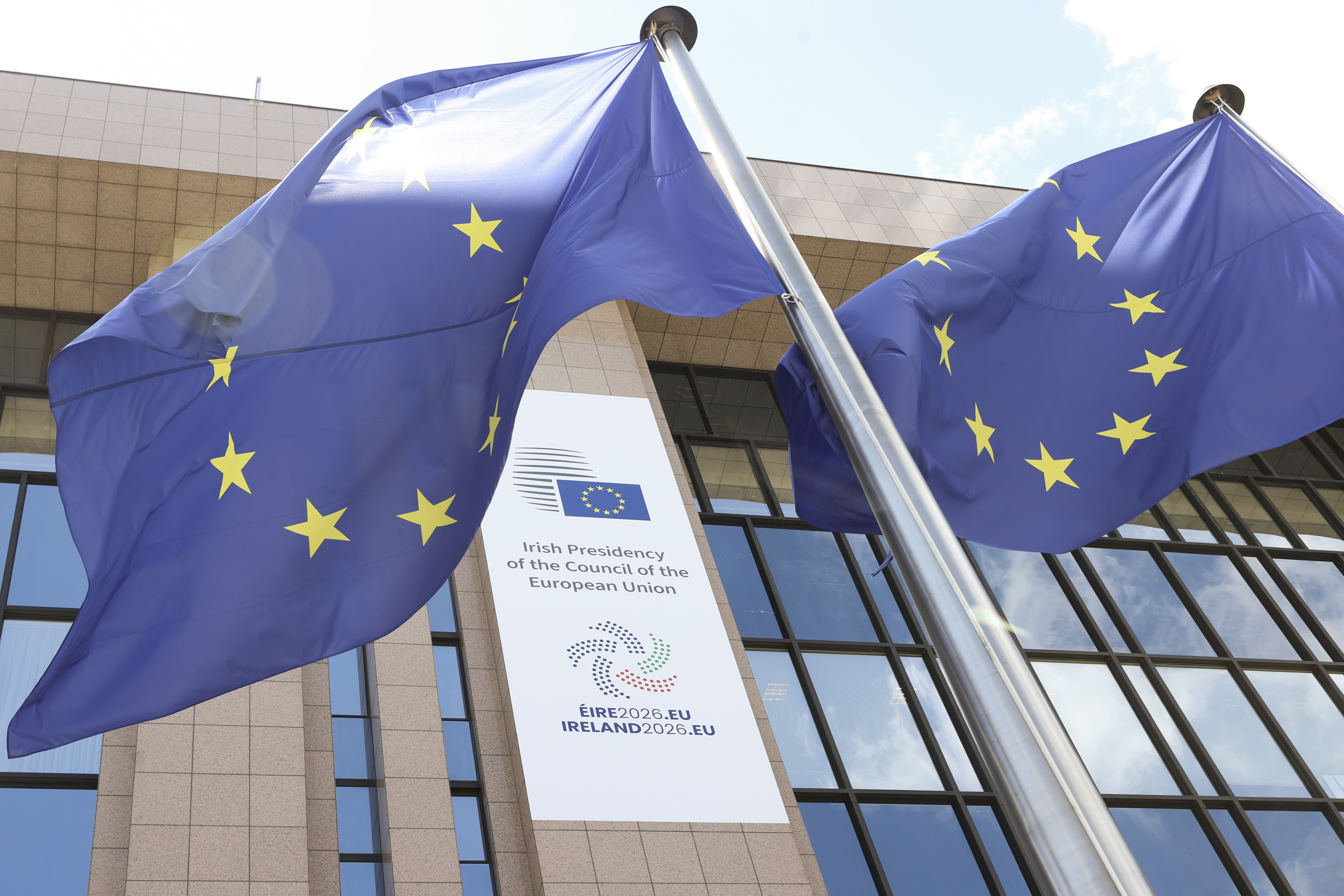
As Ireland takes on the Presidency of the Council of the European Union, CEN and CENELEC, together with our Irish Member, the National Standards Authority of Ireland (NSAI), warmly welcome the start of this important chapter for Europe. We look forward to working closely with the Irish Presidency over the next six months to support its priorities and help deliver concrete results for citizens and businesses across Europe.
Ireland takes on the Presidency at a pivotal moment. Europe faces both ambition and challenge: competitiveness, geopolitical pressures, and the green and digital transitions are reshaping the context in which it must build its future. Trusted standardization is one of the tools that can help Europe respond, translating policy ambition into practical solutions that enable implementation, trust, interoperability, and market coherence.
As two of Europe's officially recognized European Standardization Organizations, CEN and CENELEC stand ready to support the Irish Presidency by leveraging the strength of the European Standardization System, at a moment that will also see the expected publication of the European Commission's proposal to revise Regulation (EU) 1025/2012, often described as the ‘rulebook’ for standardization in Europe.
Strengthening competitiveness and the Single Market
A central ambition of the Irish Presidency is to enhance Europe's competitiveness and reinforce the Single Market. The Presidency has rightly placed the One Europe, One Market Roadmap at the heart of its programme, treating its objectives as core priorities.
European standards are themselves a cornerstone of the Single Market. By ensuring common technical standards across Europe, they facilitate market access, interoperability, foster innovation, and create trust for businesses and consumers, while offering a practical way to simplify compliance with European legislation which is of paramount importance in an era of energy transition and technological transformation.
To deliver these benefits effectively, CEN and CENELEC are working to bring standards closer to the daily realities of industry, SMEs, innovators and stakeholders: making them more digital, easier to use, and better aligned with how users actually work. In this context, standardization will play a particularly important role in supporting the European Product Act, one of the Roadmap's flagship files expected during the Irish semester.
Upholding values through trusted and inclusive standardization
Alongside competitiveness and security, values stand as a central pillar of the Irish Presidency's programme: trust, openness, broad participation and a continued commitment to ensuring that Europe's markets work in the interest of society as a whole.
European standardization is itself an expression of these values. Built on consensus, inclusiveness, quality, national participation and trust, it brings together industry, public authorities, societal stakeholders, researchers and innovators from across Europe to develop shared solutions. This matters particularly in areas such as artificial intelligence, where Europe is seeking to balance innovation with fundamental rights: laws tell us what to achieve; standards help show how.
Strengthening resilience, security and preparedness
Europe also faces an increasingly complex geopolitical environment, where security, resilience, and preparedness have become central policy priorities. Standards provide the trusted technical foundations needed for secure digital systems, resilient infrastructure, reliable supply chains, and robust risk management. CEN and CENELEC contribute through standardization work that supports cybersecurity, preparedness and resilience across strategic sectors, helping Europe anticipate emerging risks and reinforcing its strategic autonomy. This approach is strengthened by alignment with international standards systems, which ensure interoperability, scalability and global market access.
Strengthening the European Standardization System for the future
The Irish Presidency also begins at a moment when CEN and CENELEC are actively shaping the next phase of their work. While the revision of Regulation 1025/2012 will define the broader legislative framework, CEN and CENELEC are already advancing a transformation of their own: making European standardization faster, easier to use digitally, and more closely connected to innovation, regulation and application — while preserving the qualities that define the European model: consensus, inclusiveness, quality, national participation and trust.
A central element of this evolution is the European Standardization Hub: a structured gateway designed to capture innovation where it takes shape (in industry consortia, research projects, open-source communities and international fora) and connect it to the European framework. The Hub is a bridge, not a bypass: it works through Technical Committees and the national delegation principle, ensuring that Europe can scale innovation while preserving the coherence, predictability and trust that define European standardization.
This direction was recently affirmed when, at their General Assembly in Cyprus in June 2026, the 43 Members of CEN and CENELEC signed the Cyprus Commitment, setting a shared course for the future of European standardization.
Looking ahead
Over the next six months, Ireland will play a crucial role in shaping the European Union's policy agenda. For European standardization, this Presidency coincides with an especially important period as the future framework for the standardization system comes into focus.
CEN, CENELEC, and NSAI, together with our wider community, stand ready to work with the Irish Presidency, EU institutions, and stakeholders across Europe to ensure that standardization continues to underpin Europe's ambitions and remains an effective tool wherever Europe's future is being shaped: in regulation, industry, innovation, and digital infrastructure.