Young professionals bring new energy, ideas, and skills to European standardization. As our society undergoes rapid transformations, their contributions are key to ensuring that standards remain relevant, forward-looking, and impactful.
In the context of the green and digital transitions, and as Europe strengthens its efforts to build a skilled and future-oriented workforce, we are continuing our interview series dedicated to young professionals. Through conversations with young professionals working in standardization across different sectors and countries, we highlight their experiences, motivations, and visions for the future.
This campaign aims to shed light on the vital role of skills, collaboration, and innovation in keeping European standardization fit for tomorrow’s challenges – and on the people who are already helping to shape it.
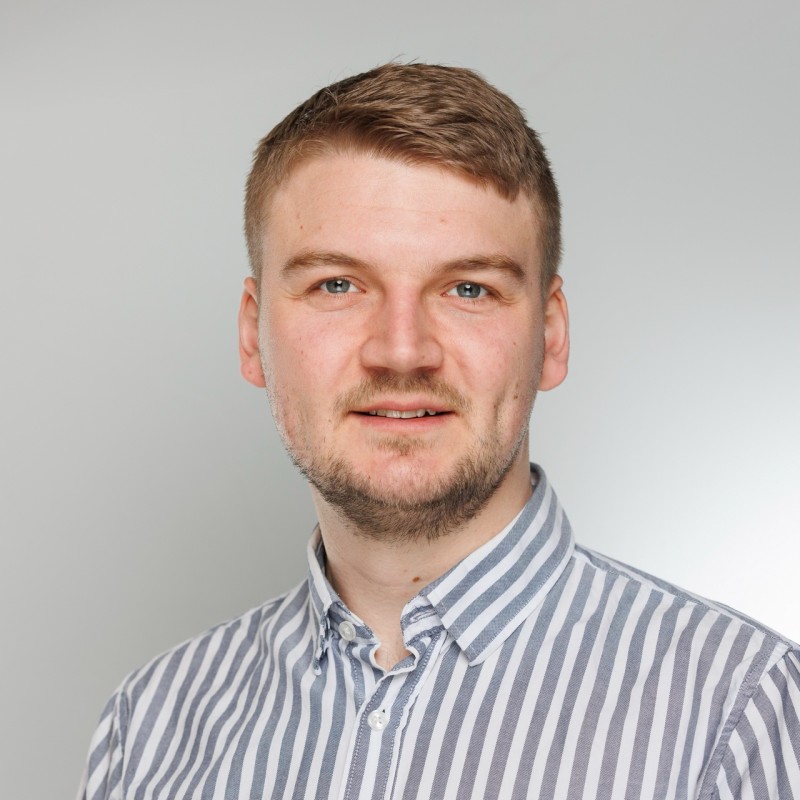
This time, we interviewed Markus Beckman, Sustainability Manager at Saab Naval, about the sustainability of the construction sector, the experience of being a chair and convenor of a technical committee, and the importance of going back to the basics in a meeting.
1. Please introduce yourself. How are you involved in standardization?
I’m the Chair for the Swedish mirror committee to CEN/TC 350 ‘Sustainability of construction works’. I’m also involved in several of the European working groups within the committee, including work on life-cycle assessment and the reuse of construction products.
2. How did you become interested in standardization?
Several years ago, when I started to work in the construction sector, I realized that comparing carbon footprint between products is far from straightforward. After doing some research, I realized that there are solid methods on how to conduct life-cycle assessments and thereby evaluate carbon footprint in a consistent way.
That made me curious about standardization. I wanted to be part of developing methods that are both technically correct and practical enough to reflect the real world.
3. You work on the Reuse of Construction Products. The construction sector is often cited as one of the most resource-intensive and environmentally impactful sectors in Europe. How can standards contribute to a more sustainable and circular built environment?
If we can reuse more products, we can reduce waste and the need for virgin materials. And when reuse is done at scale, it also has the potential to reduce costs.
One of the barriers today is uncertainty. Companies may have a product that could be reused, but they are not always sure how to assess it, document its performance or deal with the legal requirements. That uncertainty makes companies hesitant to take the risk.
This is where standards can make a real difference. They can provide practical methods for assessing materials and components before demolition and frameworks for evaluating and declaring the performance of reused products. Having such standards in place would arguably give companies the confidence to scale up reuse.
4. Your work brings together experts from different countries and backgrounds. What have you learned about building consensus and finding common ground in European standardization?
The importance of clarity. In a working group with broad competences, you should always assume that someone in the room does not fully understand what the current discussion is about. As a Convenor, you can therefore spend a surprising amount of time explaining where we are now and where we are heading.
I actually think we sometimes spend too little time going back to the basics. Experts can only contribute effectively if they agree with the bigger picture. And consensus is much easier to build when everyone can explain to their own national mirror committee what we are trying to achieve and why.
For me, good standardization is about making sure everyone is moving in the same direction.
5. You were the Convenor of CEN/TC 350/SC 1/WG 6 on Reuse of Construction Products. What motivated you to take on this leadership role, and what has the experience been like so far?
I experienced first-hand how uncertainty around regulations and standards make companies reluctant to reuse construction products. If we want reuse to grow, I believe we also need to develop the standards that support it.
In addition, I genuinely enjoy getting into the technical details and also bringing people with different backgrounds together.
6. Last year, you received SIS's award Leader of the Year. Congratulations! Looking back, is there a particular experience or achievement in standardization that you are especially proud of?
I’m particularly proud of seeing the work on reuse develop from a relatively open discussion into something much more concrete.
The collaboration with the secretariat at SIS has been particularly valuable. Together, we established a structured way of working, dividing the work into smaller subgroups within the drafting group. Everyone stayed committed to the agreed timelines, which meant we could see tangible progress every single week.
More concretely, I’m particularly proud of our first draft, which the drafting group presented to the wider working group for feedback. It made me very happy to see everyone in the drafting group taking ownership of their respective parts and being accountable for delivering them. Seeing all those individual contributions come together into a first complete draft was a great moment.
7. You are convening a European working group at a young age. Have you ever felt that your age was an advantage or a challenge in this role, and what would you say to other young professionals who aspire to leadership positions?
I have not experienced my age as a major obstacle. It could even be an advantage because I am more willing to ask questions that might seem very basic.
The standardization community has a huge amount of knowledge, but there is also a tendency to become highly specialized and get caught up in detailed discussions. My advice to other newcomers is therefore: ask the basic questions. Why are we discussing this? What are we trying to achieve? And how does this fit into the bigger picture?
I also think it is important to keep the work moving. There is a time and place for detailed discussions, but not every question needs to be solved in the same meeting. Often it is better to put an issue in the “parking lot” and come back to it a month later.
In my experience, people are often highly motivated when they can see that the work is progressing.
8. What advice would you give to fellow young professionals to encourage them to get involved in standardization?
My advice is simply to get involved. You do not need to be the person with the most technical knowledge in the room. It is a great opportunity to learn, but also to influence how an entire industry develops. You get to see how regulations, technical requirements and different national perspectives come together — and sometimes conflict.
And if you eventually take on a leadership role, I would encourage you to establish a clear vision early on. Sometimes it’s not entirely clear exactly what a new standard work should achieve, but people still need to understand where the work is going. A clear direction can make it much easier to build consensus and keep everyone moving forward.
This article is part of our special series dedicated to Young Professionals in European Standardization. Through a series of articles and interviews with standardization professionals, experts and business leaders coming from a variety of backgrounds, we explore the interaction between innovation, skills and standardization in some of the most relevant sectors for Europe’s long-term competitiveness. You can read the other articles related to the campaign here.