Policy
Shaping the Future of European Standardization
CEN and CENELEC share the European Commission’s ambition for faster, more inclusive and responsive European standardization that strengthens Europe’s competitiveness and international influence.
Following the publication of the proposal for a New Standardization Regulation, we are working with policymakers, our Members and stakeholders to ensure the future framework builds on what works and strengthens the European Standardization System.
How should European Standardization evolve?
- Preserve an independent, stable and predictable system, based on the public-private partnership, national delegation and consensus.
- Address the actual sources of delay, with clearer timelines, earlier coordination and more predictable assessment and citation of standards.
- Keep European standardization coherent, avoiding parallel routes and using the European Standardization Hub to integrate high-quality external specifications.
- Preserve Europe’s international influence and participation, maintaining international-first and strong cooperation with ISO and IEC.
- Make wider access to standards sustainable and trustworthy, protecting copyright, integrity and traceability while supporting sustainable financing.
- Make standardization faster, more agile and digital, while fostering broad participation and maintaining quality and trust.
The New Standardization Regulation proposal has opened an important legislative debate. CEN and CENELEC are advocating for reforms that strengthen, rather than fragment, the system Europe relies on.
Explore our positions and proposals for a stronger European Standardization System below.

European Agile Specifications: a new step in modernizing European standardization
CEN and CENELEC have approved the European Agile Specification (EAS) – a new standardization deliverable designed to bring trusted technical solutions to market more quick.
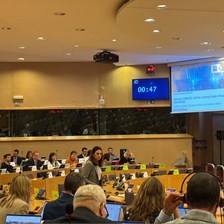
'Standards are a backbone of the Single Market': CEN and CENELEC contribute to IMCO hearing on the European Product Act
On 15 October, Andreea Gulacsi, Director of Policy and External Affairs at CEN and CENELEC, participated in a public hearing of the European Parliament's Committee on the Internal Market and Consumer Protection (IMCO) on the European Product Act.
Press Release: 'Europe’s competitiveness needs a stronger standardization system – not a fragmented one'
Following the publication of the European Commission's proposal for a new Standardization Regulation on 6 October 2026, CEN and CENELEC reaffirm their support for faster and more effective standardization.

The CEN and CENELEC Cyprus Commitment
At their General Assemblies in Cyprus, the 43 Members of CEN and CENELEC signed the CEN and CENELEC Cyprus Commitment, reaffirming their shared ambition to guide the future evolution of the European Standardization System.

Position Paper: 'Shaping the Future: A New Era for European Standardization'
CEN and CENELEC provide Evidence for the European Commission's current revision of Standardization Regulation EU no. 1025/2012 and shaping the future of European Standardization together. What do you need to know about timely citation? What are other deliverables available to standard makers and users? How can we strengthen the Single Market with the NLF?
Link to EC Consultation - 'Have Your Say'


Discussion Paper: 'Call for Evidence on the Revision of the New Legislative Framework'
The New Legislative Framework (NLF) is the backbone of the European Single Market for products. Built on a public-private partnership, it clearly separates the role of legislators from that of standards: the former set out essential requirements, while the latter, through the work of experts via European Standardization Organizations (e.g. CEN, CENELEC, ETSI), provide the technical specification on how to respond to these requirements.
The specialist knowledge that experts contribute to standardization is put to optimum use, and the legal framework remains efficient.

Position Paper: 'Omnibus aligning product legislation with the digital age'
CEN and CENELEC urge the EC to follow the consistency set in recent legislative negotiations and continue to use the Machinery Regulation as blueprint for all future articles on common specifications, including in this proposed Omnibus.
More Policy Position Papers
Position Papers link
European Standardization is a powerful and strategic tool for improving the efficiency of European policies. See how CEN and CENELEC are contributing to the legislative process by following the link to our other position papers.
Background on the relationship between the European Commission and European Standardization
Standards are technical specifications defining requirements for products, production processes, and services. These specifications are voluntary and developed by industry/market actors to build a consensus that is transparent. This public private partnership ensures interoperability and safety, reduces costs and boosts innovation for the Single Market. European Standards are under the responsibility of the European Standardization Organizations (e.g. CEN, CENELEC, ETSI) and can be used to support EU legislation and policies. Click here to learn more about the European Commission and standardization policy.