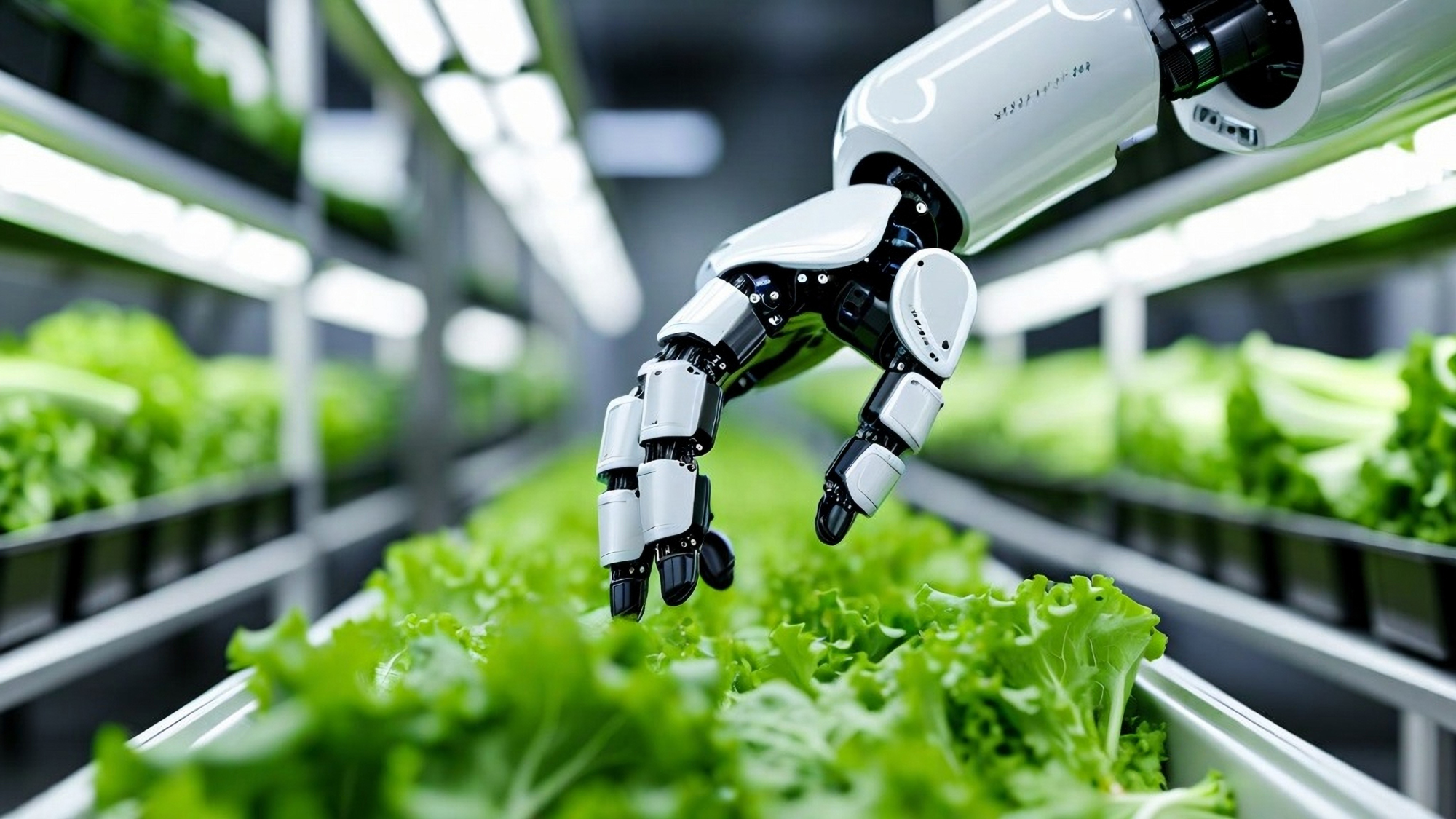
A new CEN Workshop is being established to build upon the innovative outcomes of the R&I project Horizon Europe programme 'MOZART' (Morphing Computerized Mats with Embodied Sensing and Artificial Intelligence). Its goal is to develop a new generation of soft robotics to complement the handling of food products during processing.
According to recent studies, the food processing industry is both essential and rapidly evolving in Europe, contributing significantly to GDP and employing millions of workers. Yet many essential operations, especially those involving soft, fragile, or heterogeneous food items—remain heavily manual, labor-intensive, prone to injury, waste, quality issues, and inefficiencies. As automation technologies mature under what might be called 'Food Processing 4.0', there is strong motivation to bring robotics into domains traditionally resistant to automation: handling delicate products with precision, hygiene, and minimal damage.
The MOZART project (Grant Agreement ID 101069536) aims precisely at advancing the state of the art in robotics for soft object manipulation, with a specific focus on the food industry.
It introduces AUTOMATs: AI-controlled, deformable modular mats that replace traditional grippers through adaptive surfaces integrating sensing, actuation, and control. These systems combine origami-inspired mechanisms, soft sensing skins, and distributed AI control to manipulate heterogeneous food items safely. MOZART targets real industrial applications (such as fish descaling, poultry sorting, and product presentation). Beyond technical innovation, the project integrates human–robot interaction and social sciences to promote sustainability, ergonomics, and workforce transition. Expected impacts include reduced manual labor, improved food safety, lower waste, enhanced productivity, and environmental benefits. However, challenges remain in durability, regulation compliance, AI generalization, workforce adaptation, and scaling the technology from prototypes to market-ready solutions.
The CWA, backed by existing relevant standards in each specific domain, is aimed indeed at defining the relevant terminology and describing the characteristics, performance criteria, and methodologies for specifying and evaluating the manipulation performance of AUTOMAT systems. An informative annex could also provide templates for presenting AUTOMAT characteristics, which can assist manufacturers in describing product features, users in specifying system requirements, and operators in defining the properties of objects to be handled within specific applications. However, the document is not intended for verification or validation of safety requirements.
The kick-off meeting for the Workshop is planned to take place remotely on the 23rd of February 2026 from 14:00-17:00. Please, send the attached registration form to the Workshop secretary (UNI) Emanuela Pisani (emanuela.pisani@uni.com).
All interested parties are invited to submit comments on the draft Project Plan using the commenting form below, to the Workshop secretary to the Workshop secretary (UNI) Emanuela Pisani (emanuela.pisani@uni.com) by the 20th February 2026.
For more technical details, please refer to the draft WS description, which contains all relevant technical information. Additionally, comments or observations can be submitted via the dedicated commenting form below.
Download the documents:
- Workshop description and draft Project Plan
- Agenda of the Kick-off Meeting
- Registration form
- Commenting form